



Online English Lessons in Kenya: Learn from Anywhere
84% of the world’s 1.5 billion English-speakers are not native speakers. English lessons online give you a practical way to build spoken English through live lessons, real-world conversations, and study advice, wherever you are in Kenya. You can practise using English for everyday interactions and work without travelling to a classroom.
It’s natural to wonder whether English lessons online can feel engaging and useful. They can when lessons include speaking, feedback, and practice with situations you may encounter beyond the screen. A flexible format can also help you make learning part of your routine.
In this article, you’ll learn what online English classes in Kenya can include, how live practice supports speaking, and what to consider when choosing a course. You’ll also find practical ways to prepare for lessons and build confidence between them.
Key Takeaways
- Choose a learning level that matches your current ability, then build skills step by step as your needs develop.
- Practise everyday conversations to make new words and phrases easier to use beyond the lesson.
- Consider whether group interaction or individual teacher attention better supports your learning goals.
- Use practical study habits between classes to reinforce lessons and keep progress moving.
- Build spoken confidence by practising clear expression, listening carefully, and responding in real time.
Why choose an online English course?
Yes, English lessons online can suit children and adults in Kenya. Choose a course with age-appropriate examples, a suitable level, and a pace that fits the learner’s goals.
Courses for Beginner to Advanced Learners
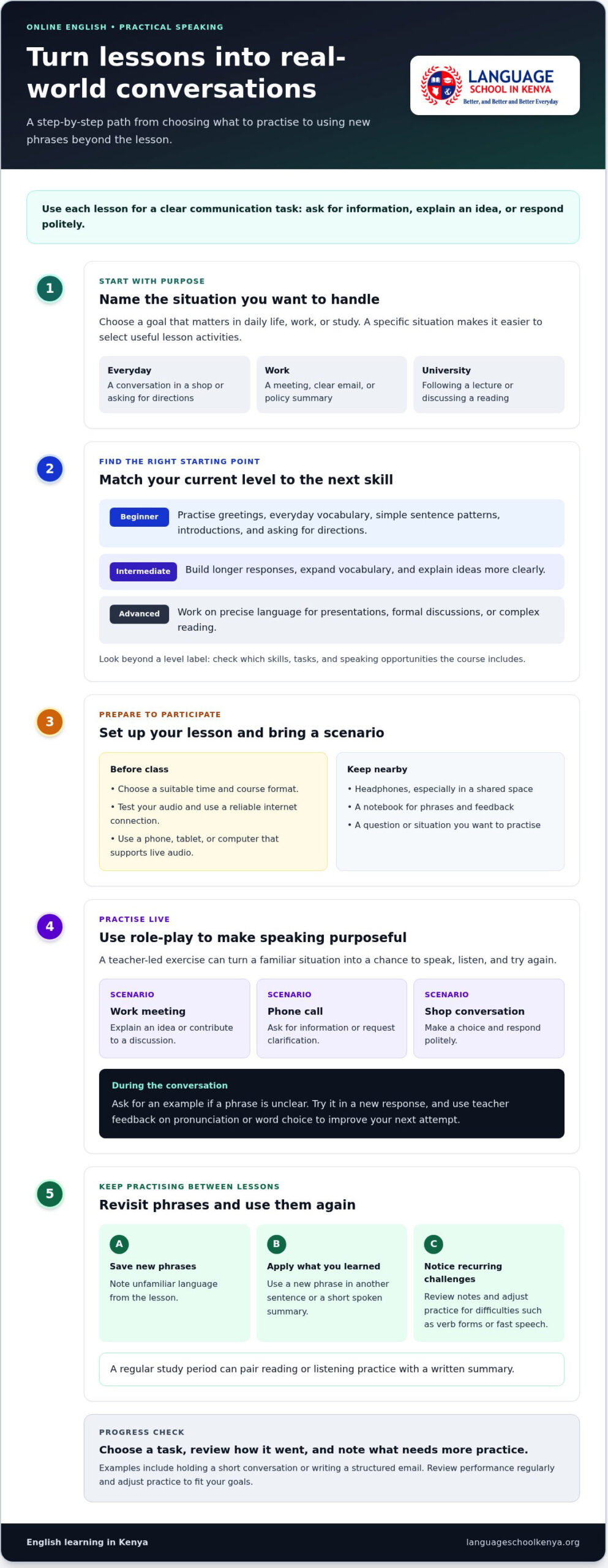
Beginners can start with greetings, everyday vocabulary, and simple sentence patterns. For example, they can practise introducing themselves or asking for directions. Intermediate learners can develop longer responses, expand their vocabulary, and explain ideas more clearly. Advanced learners can focus on precise language for presentations, formal discussions, or complex reading. Before choosing a course, identify what you can already do and what you want to tackle next.
Course Duration and Learner Progress
Course duration depends on your starting level, learning goals, lesson frequency, and independent practice. Progress is easier to track when you set a clear task, such as holding a short conversation or writing a structured email. Review your performance regularly, note recurring difficulties, and adjust your practice accordingly. Someone who needs workplace English may study different material from someone preparing for university.
Online learning can make English practice accessible beyond a classroom. The world has 1.5 billion English-speakers, and 84% are not native speakers. That context reflects how English is used across backgrounds. In a lesson, a learner can practise explaining an idea, asking a follow-up question, or understanding a different accent. These specific tasks help connect study with communication outside class.
For government work, useful practice may include writing a clear email, summarising a policy document, or contributing to a meeting. Higher education calls for different tasks, such as following a lecture, discussing a reading, and organising an assignment. Start by identifying the situations that matter most. Then compare course activities with those needs instead of choosing a course based only on its level label.
Course levels help you find an appropriate starting point, but labels alone don’t show what a course covers. Look for the skills and tasks included, such as listening comprehension, grammar, and formal writing. Also distinguish a course completion certificate from an external language qualification. A certificate’s value depends on what it records and who recognises it. Match that evidence to your education or work goals.
Self-study courses can support learning between live sessions or help you build an independent routine. For English lessons online, choose one manageable activity, such as reviewing vocabulary before using it in a spoken response. Note unfamiliar phrases and revisit them in a later exercise. If studying independently feels difficult, schedule a regular study period and pair reading or listening practice with a written summary.
Whether you’re studying for daily communication, university, or government work, begin with one practical goal. Then select a level and learning format that help you practise that goal consistently.
Learning English through real-world conversations
Practising real situations connects English exercises with everyday communication. Try role-playing a work meeting, a phone call, or a conversation in a shop. Each scenario gives you a clear purpose: ask for information, explain a choice, or respond politely. After speaking, note unfamiliar phrases and practise using them in another sentence.
Before choosing a tutor or course, review the lesson format, level, teaching approach, and opportunities to speak. Look for clear examples of activities, such as discussions, role-play, and feedback on pronunciation or word choice.
A personalised learning plan starts with your goal, such as preparing for workplace conversations, university discussions, or everyday interactions. Choose relevant exercises, then review your progress through specific tasks, such as explaining an idea clearly. Course pricing depends on level, lesson format, frequency, and personalisation, and is provided after a quote request.
Interactive lessons can turn familiar situations into speaking exercises. You might practise ordering a meal, asking a colleague for clarification, or introducing yourself in a meeting. The tutor can prompt a fuller answer, model a useful phrase, and help you try again. This gives practice a practical purpose beyond memorising vocabulary.
Online study can make learning easier to fit around work, school, or home responsibilities. You can also revisit notes and practise between live sessions. For example, save new phrases from a lesson, then use them in a short spoken summary. The benefit comes from applying what you learn, not simply opening a screen.
A free level test, where offered, can help identify suitable learning material. Treat the result as a starting point, then consider which tasks feel comfortable and which need practice. A learner account may keep exercises, notes, and completed activities together. Use it to track recurring challenges, such as verb forms or understanding fast speech.
For online study in Kenya, use a reliable internet connection and a phone, tablet, or computer that supports live audio. Headphones can help you hear clearly in a shared space. Payment options depend on the course provider, so review the accepted method and total amount in KSh before paying.
To book a lesson, choose a learning goal, suitable time, and course format, then follow the provider’s booking and payment steps. Before class, test your audio, keep a notebook nearby, and prepare a question or situation to practise.
During the lesson, focus on speaking as well as listening. Ask for an example when a phrase feels unclear, then use it in a new response. For a structured way to build practical skills, explore English learning options.
Live, teacher-led online group and private classes
Live classes let you practise with a teacher in real time. Group and private formats suit different speaking goals and learning preferences.
Group and Private Class Formats
In a group class, learners take turns speaking, listening, and responding. For example, a teacher might guide a discussion about workplace communication. This format lets you hear different voices and share conversation time. A private class can focus more closely on your needs, such as grammar, pronunciation, or preparing a presentation. Choose a format by considering your speaking goals, comfort participating, and preferred feedback style.
Online Lesson Types in Kenya
Online English classes in Kenya may include live group lessons, private teacher-led lessons, and self-paced study. A live lesson gives you opportunities to ask questions and practise responses immediately. A self-paced course lets you complete exercises independently, but feedback and conversation may be limited. Consider whether you need teacher interaction, individual attention, or flexible review. Some learning plans combine live sessions with independent practice.
Finding a Qualified Online Tutor
Look for a tutor with relevant English-teaching training and experience supporting your learning level. A clear lesson plan should connect activities with your goals, such as contributing more effectively in meetings. Ask what feedback you’ll receive on grammar, speaking, and pronunciation. A useful lesson includes time for you to practise, not just listen. Find out how progress is tracked, for example by revisiting a speaking task later.
Live, teacher-led classes differ from self-paced courses because a teacher can answer questions and adapt an activity during the lesson. Self-paced study gives you more control over timing, while live sessions provide immediate interaction. For example, you can practise a job interview answer and receive feedback in real time.
Lesson activities can reflect familiar situations in Kenya. You might practise explaining a work task, asking for directions, or contributing to a university discussion. The teacher can introduce useful phrases, then invite you to use them in a role-play. This connects vocabulary and grammar with purposeful communication.
Group lessons are useful for practising turn-taking and listening to varied responses. Private lessons can give more attention to a specific challenge, such as organising answers clearly. Before choosing, identify the situation you want to handle better. Then compare the lesson format with that goal and your preferred amount of teacher feedback.
To prepare for a live class, test your audio and keep your lesson notes nearby. Bring a question or a short example, such as an email sentence you want to improve. During the session, speak up, note corrections, and try revised phrases aloud. This helps turn teacher feedback into active practice.
English study advice
Start with a task you want English to help you complete. For example, choose contributing to a work meeting, following a university lecture, or handling a phone call. A clear purpose helps you select useful practice instead of collecting unrelated vocabulary. Write down the task, then identify the words and phrases you’ll need. English lessons online can fit your study routine when you connect each session to that practical goal.
Build a routine around small, repeatable activities. If your goal is business English, practise introducing a project, giving a concise update, and asking a colleague for clarification. Say each response aloud, then note where you paused or searched for words. That record can guide your next exercise and give each study session a clear focus.
Use everyday materials actively, not passively. Read a short news item, pick out unfamiliar expressions, and explain its main point aloud. After listening to a conversation or lesson, write a brief summary from memory. Compare it with your notes and identify missing details. This connects reading and listening with speaking and writing.
For each practice session, follow a simple sequence:
- Choose a situation: Select one task, such as explaining a work responsibility.
- Gather useful language: Note key terms and phrases from your lesson or reading.
- Practise aloud: Give your explanation without reading every word.
- Review one difficulty: Check a grammar point or phrase that interrupted your response.
- Try again: Repeat the explanation using the improved wording.
Keep a vocabulary record with context, not isolated translations. For example, note “Could you clarify that point?” beside the situation of asking a question during a meeting. Then create another example, such as using the phrase in a class discussion. This gives you a clear prompt for review and helps make the expression easier to recall in a similar conversation.
Grammar practice works best when it helps you express a message. If past-tense verbs are difficult, describe what you did yesterday, then review each verb. For articles, describe a familiar object and check phrases such as “a notebook” or “the notebook.” Correct one pattern at a time, then use it in a new sentence.
At the end of a study period, save an example of your work. This could be a revised email, a short voice recording, or a lesson summary. Compare it with an earlier example to notice changes in clarity, vocabulary, and sentence structure. English lessons online can help you act on that reflection by practising a remaining challenge in your next lesson.
Spoken English
Spoken English brings pronunciation, vocabulary, listening, and response together. Practise these skills with a clear task. For example, describe how to prepare a familiar meal, explain each step, and answer a follow-up question. This helps you organise ideas, choose verbs, and speak at a natural pace. Record yourself and notice where your meaning becomes difficult to follow. English lessons online can give you guided opportunities to work through similar speaking tasks.
Clear communication matters more than copying another speaker’s accent. Focus on pronouncing key words distinctly and stressing words that carry meaning. Compare “I sent the report yesterday” with “I sent the report today.” Emphasising the time word changes the message. Practise short pairs, then use them in a longer explanation.
Pauses can help you organise an answer. If you lose a word, explain the idea another way instead of stopping completely. For instance, if “receipt” slips your mind, say “the paper showing what I paid.” This paraphrasing skill keeps a conversation moving while you search for vocabulary.
Try this practice sequence with a short topic, such as describing a place you know:
- Plan: Write three key words, not a full script.
- Speak: Describe the place aloud using those prompts.
- Review: Note one unclear phrase or repeated word.
- Improve: Replace it with a more precise expression.
- Repeat: Give the description again without reading sentences.
Listening closely also strengthens spoken language. Take a short audio clip and identify the speaker’s main point, then summarise it in your own words. Next, respond with a related idea or question. This moves practice beyond repeating sounds and trains you to understand meaning and contribute appropriately.
For an online speaking session, use headphones and position your device near your face. Speak in complete thoughts, then leave space for the other person to respond. In a role-play about arranging a visit, practise confirming the time, asking about the location, and repeating details to ensure understanding. These conversational moves make your speech easier to follow.
Set a personal target for each speaking session, such as explaining an opinion with a supporting reason. Keep a short record of topics practised and phrases you want to reuse. English lessons online can help you express those ideas aloud and apply feedback to your next attempt.
Build spoken communication through structured learning with English courses.
The Language School in Kenya (École de Langues du Kenya): English Courses in Nairobi
The Language School in Kenya (École de Langues du Kenya) offers English lessons online for learners who want structured support with practical communication. If your next goal is improving English for study, work, or everyday conversations, a course can help you focus your learning around that purpose. The school also offers French classes, Spanish classes, and German language classes for learners pursuing another language across the country.
Before starting, consider where you want to use English and which skills you want to strengthen, such as speaking clearly, understanding conversations, or expressing ideas in writing. This gives you a practical starting point for choosing a suitable learning path.
To explore English lessons online, contact The Language School in Kenya.
Make Your Next English Goal Practical
Choose a real situation where you want to communicate more confidently, such as sharing an idea at work or joining a study discussion. Use that goal to guide your next step, whether you’re comparing English lessons online or looking for structured classroom learning. A clear purpose helps you focus on useful language and see where practice can make a difference.
The Language School in Kenya (École de Langues du Kenya) offers English courses, alongside French and Spanish classes. If learning English is your next priority, consider how a course can support the situations you want to handle. You can also explore another language to suit your personal or professional plans.
Take the next step at a pace that suits your goals. Contact The Language School in Kenya to discuss English courses in Nairobi. Your next conversation can begin with one practical learning goal.
Frequently Asked Questions
How much do online English lessons cost in Kenya?
The cost depends on the course format, lesson frequency, learning goals, and level of individual support. Group, private, and other course arrangements can affect the overall fee. The Language School in Kenya (École de Langues du Kenya) provides online classes, and course pricing is given after a quote request. Share your preferred format and learning needs to receive pricing relevant to your situation, in Kenyan shillings.
What English proficiency levels and courses can I study online?
You can study English from beginner through advanced levels, with course content suited to your current skills and learning goals. For example, a beginner may focus on introductions and everyday phrases, while an advanced learner may practise presenting ideas or discussing complex topics. The Language School in Kenya (École de Langues du Kenya) offers English courses and online classes. Choose learning activities that match the situations you want to handle confidently.




Pingback: Private English Lessons with Personalised Teaching